
VoiceDesk
Turn business calls into completed work.
VoiceDesk understands why a customer is calling, gathers the details a workflow needs, prepares policy-approved work, and brings in a person when judgment or responsibility matters.
The corrected native GPT-Live path has completed an owner-initiated inbound call through a real Twilio test number. Production rollout, business-tool authority, carrier portability, and service commitments remain open.
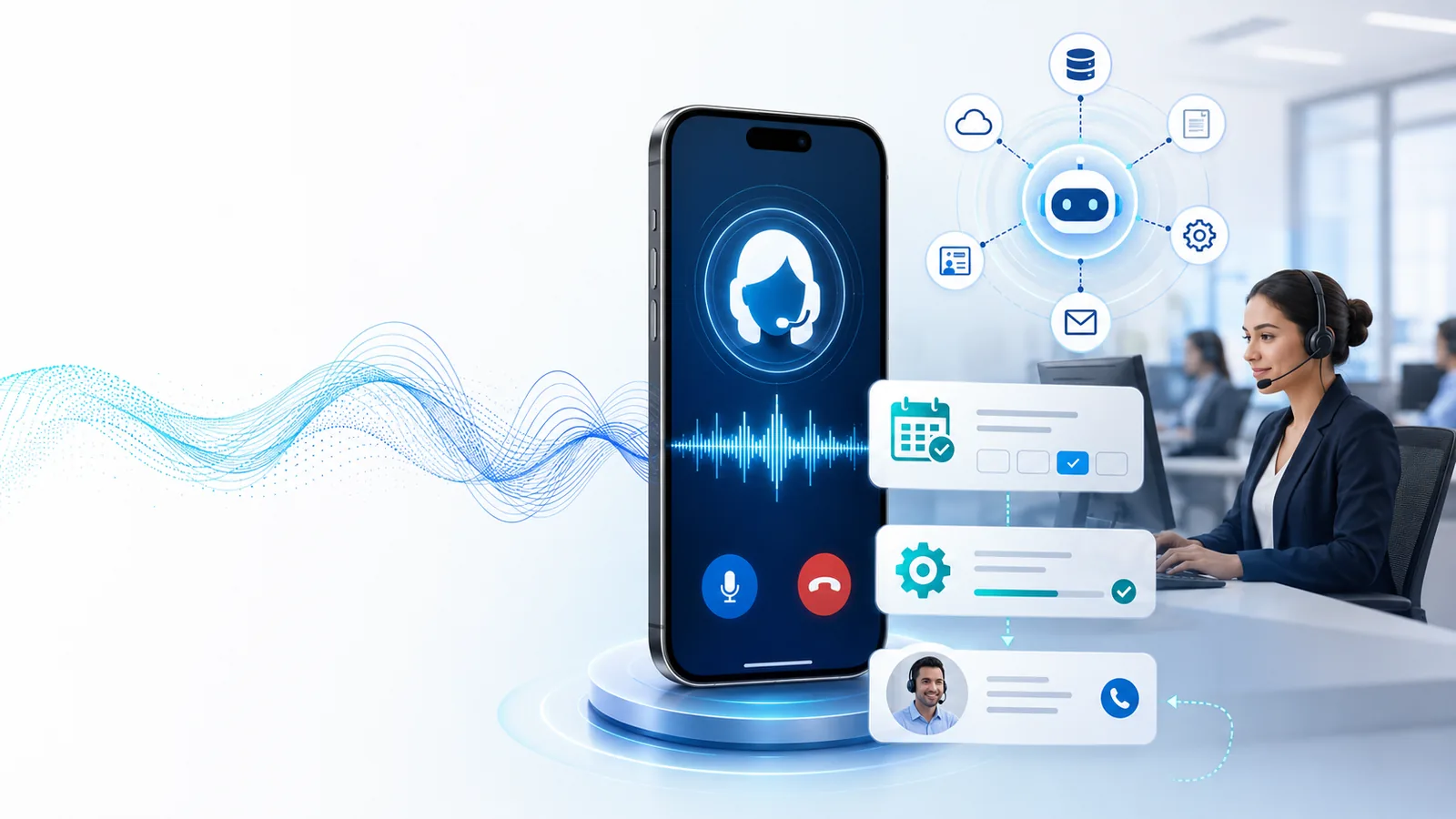
Task-first
Designed to complete appointments, work orders, messages, and follow-up—not just answer FAQs.
Human-aware
Warm handoff, callback tasks, and clear control boundaries are part of the workflow.
Traceable
Conversation state, approved actions, tool results, and handoff context remain inspectable.
Why it matters
A phone conversation is only useful when the work moves forward.
Traditional IVR can route keypad input. Generic voice bots can talk. Service teams need a system that can understand intent, maintain task state, operate within policy, and leave a reliable outcome.
Peak-hour pressure
Routine calls arrive together, while customers still expect an immediate and useful response.
Fragmented follow-up
Details are copied from calls into calendars, tickets, inboxes, and callback lists by hand.
Risky automation
A fluent voice is not enough when an action affects a booking, customer record, or commitment.
Product capabilities
A governed runtime for real phone tasks.
The prototype separates telephony, speech, dialogue, task execution, and human control so each layer can be tested and replaced without rewriting the product.
Natural-language intake
Recognizes intent, asks focused follow-up questions, and validates required task fields.
Stateful task execution
Runs versioned workflows with confirmations, idempotency, result read-back, and safe failure paths.
Enterprise knowledge
Retrieves approved FAQs and operating information instead of relying on free-form model memory.
Real-time voice control
Supports media streaming, voice activity detection, interruption, playback clear, and latency telemetry.
Human handoff
Transfers context, collected fields, risk signals, and recommended next steps to an operator.
Operational evidence
Produces call summaries, task records, tool events, and evaluation artifacts for review.
From input to outcome
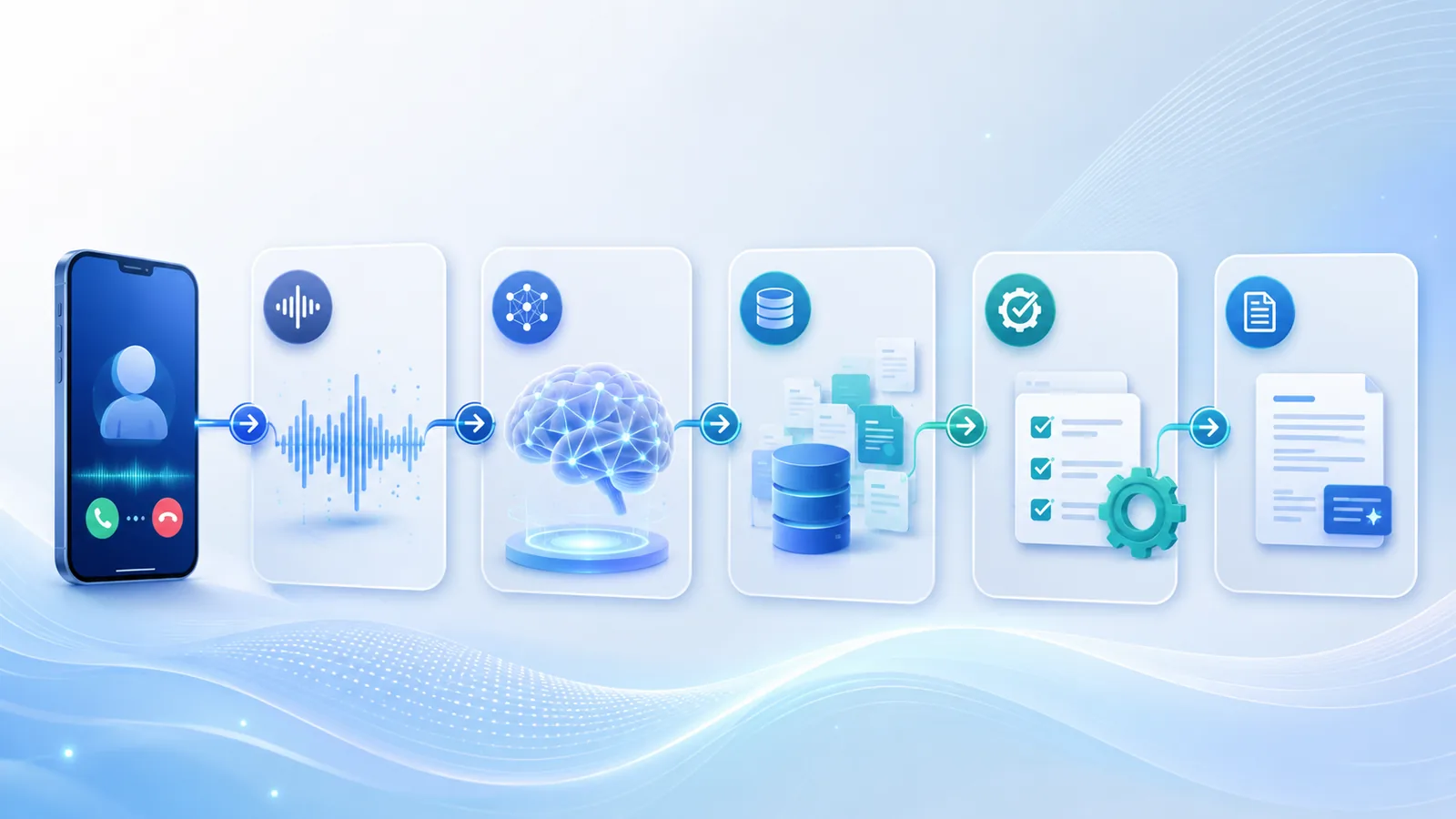
One call, one controlled path to an outcome.
VoiceDesk keeps the caller-facing conversation short while maintaining the structured state required by the business workflow behind it.
- 1
Connect
Receive a call through a telephony provider. The verified preview uses a Twilio test number; SIP/PBX adapters remain an integration path.
- 2
Understand
Stream speech, detect turns, classify intent, and collect only the fields the selected task needs.
- 3
Check
Retrieve approved knowledge and evaluate policy, confidence, risk, and required confirmations.
- 4
Act
Call an authorized calendar, CRM, ticketing, messaging, or MCP-backed tool and read the result back.
- 5
Complete or hand off
Close with a traceable result, or transfer a concise context package to a person.
Shared governance core
Built on the EVEMISS Enterprise Communication Agent Core.
VoiceDesk shares governance infrastructure with MailGuard while keeping its own real-time media, dialogue, task, and telephony responsibilities.
Identity & tenant boundaries
Keep organizations, roles, data, and tool scopes separated.
Policy & risk gates
Decide when a response, write action, confirmation, or handoff is allowed.
Tool execution
Expose approved business actions through structured, least-privilege interfaces.
Event ledger & observability
Connect source, state, policy, action, and result into an auditable trace.
Where to start
Start with narrow, high-frequency service workflows.
Appointments
Collect requirements, check availability, confirm the slot, and send a follow-up.
Repair & service intake
Capture the issue, create a structured ticket, and route urgent or unclear cases.
Messages & callbacks
Take a complete message outside business hours and create an assigned callback task.
FAQ with escalation
Answer from approved sources, then transfer when the question needs judgment or access.
Engineering status
Real inbound voice path verified. Deliberately not presented as production-ready.
A bounded owner-initiated call now proves the native speech path, governed knowledge response, transcript evidence, terminal callbacks, and cleanup. It does not prove production scale, cost, reliability, or business-action authority.
✓Verified in the current engineering package
- A real Twilio inbound call reached the native GPT-Live PCMU path, disclosed the AI role, completed multiple turns, and closed with signed terminal callbacks.
- The assistant answered only from approved business-hours data, admitted when product information was not verified, and executed no booking, outbound call, or other business action.
- The Reception Center separates Contact, Work, and Action state so an operator taking a case is not confused with answering the phone or completing a task.
- The full VoiceDesk regression and installable private Preview passed after the corrected model-authored greeting replaced the preliminary Twilio voice.
→Still requires authorized external validation
- Same-call human transfer in a partner enterprise endpoint, plus SIP/PBX and additional-carrier adapters.
- Authorized calendar, CRM, ticketing, and messaging actions with product-owned confirmation policies.
- Taiwan Mandarin localization, long-call continuity, and production latency, cost, and reliability.
- Production PostgreSQL, OIDC, security hardening, operating procedures, and service-level commitments.
Designed boundaries
Automation with an explicit responsibility boundary.
VoiceDesk is designed for disclosed AI assistance and low-risk, policy-approved work. It is not positioned as a replacement for accountable human service.
No impersonation
The assistant identifies itself and does not pretend to be a human employee.
No fabricated success
A task is only confirmed after the authorized system returns a valid result.
No silent high-risk action
Payments, refunds, legal commitments, and sensitive exceptions require stronger controls or people.
No dead-end loop
Low confidence, repeated failure, urgency, emotion, or a direct request triggers a human path.
VoiceDesk · EVEMISS Technology
Choose one call flow. Build a measurable pilot around it.
We are preparing a license-reviewed free open-source Preview alongside enterprise integration and support for organizations that can define a narrow workflow, provide approved knowledge, and evaluate outcomes with their service team.
Discuss a pilot →